Sub-floor structural humidity above 70% creates an optimal bio-pathway for Eastern subterranean termites, carpenter ants, and moisture-loving wood decay fungi across Central Indiana. In historic Marion County…
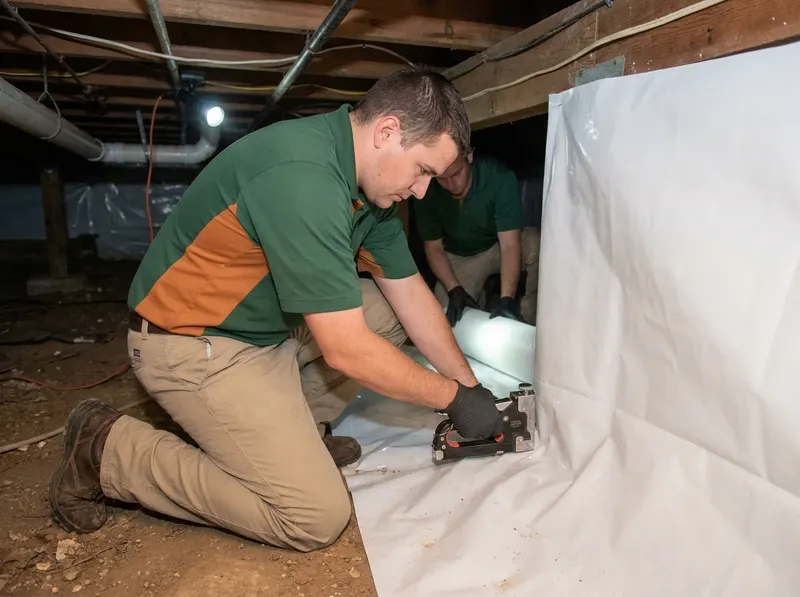
Sub-floor structural humidity above 70% creates an optimal bio-pathway for Eastern subterranean termites, carpenter ants, and moisture-loving wood decay fungi across Central Indiana. In historic Marion County neighborhoods like Meridian-Kessler, Butler-Tarkington, and Woodruff Place, unsealed dirt crawlspaces and porous limestone basement foundations pull continuous moisture from surrounding clay soils. This ground dampness migrates directly into structural sub-flooring, joists, and sill plates. Installing an engineered vapor barrier directly stops upward moisture transfer, while localized borate surface treatments render surrounding structural lumber inedible to wood-destroying insects and resistant to rot. In riverside sections near Broad Ripple or low-gradient parcels in Speedway and Fountain Square, high groundwater tables frequently push humidity levels into crawlspaces, saturating sub-floor insulation and accelerating structural degradation.
Selecting standalone moisture barrier remediation versus full active dewatering depends entirely on standing water presence. If foundation soil registers high moisture content without pooling, a reinforced 12-mil to 20-mil puncture-resistant polyethylene ground barrier taped at seams with structural pier wrapping drops crawlspace relative humidity below 55%, preventing wood rot and subterranean insect tunneling. The engineering trade-off centers on upfront capital versus ongoing maintenance: basic loose-laid 6-mil plastic costs less initially but shifts, tears during mechanical servicing, and fails to stop edge migration, whereas fully sealed mechanical crawlspace encapsulation provides durable physical exclusion against burrowing pests but requires foundation wall perimeter sealing. For properties in Castleton, Fletcher Place, or Irvington dealing with nocturnal pest entry and damp soil odor, establishing a continuous physical barrier removes the moisture reservoir that attracts silverfish, centipedes, and termites into upper living quarters.
All treatments adhere strictly to residential building code specifications for unvented and vented crawlspaces, maintaining a clear three-inch inspection gap between the top of the barrier wall attachment and the sill plate to allow future visual termite inspections. Chemical applications utilize EPA-registered inorganic borate salts that bind permanently to wood cellulose fibers without releasing volatile organic compounds into household air supplies, ensuring domestic safety for crawling toddlers, pregnant occupants, and indoor animals.
Every job gets a firm, written price after a free on-site visit.
Tell us about your crawlspace and basement moisture barrier treatment job in Indianapolis and we'll send a clear, written quote, usually the same day.
 Rovika Insect Services