Flea and tick infestations disrupt domestic living quarters when parasitic insects establish secondary harborages in carpet pile, upholstery seams, and shaded perimeter lawns. Indianapolis properties near dense tree…
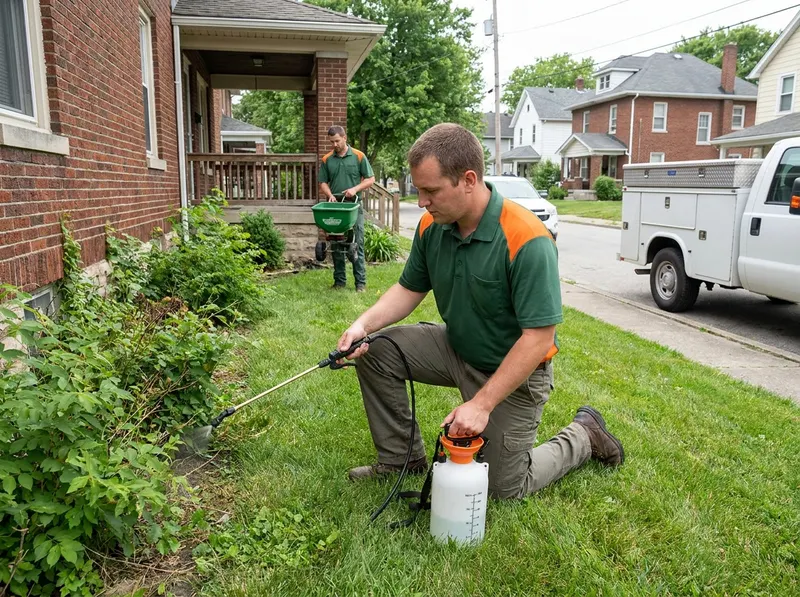
Flea and tick infestations disrupt domestic living quarters when parasitic insects establish secondary harborages in carpet pile, upholstery seams, and shaded perimeter lawns. Indianapolis properties near dense tree canopy and river corridors, such as Butler-Tarkington, Broad Ripple, and neighborhoods adjacent to White River State Park and Eagle Creek Park, experience severe seasonal tick migration via urban wildlife. A complete dual-zone protocol couples an interior insect growth regulator (IGR) like pyriproxyfen with an exterior bifenthrin micro-barrier. The trade-off between exterior-only spraying and dual-zone remediation is thoroughness: treating strictly outdoors allows existing pupae in floorboards to continue hatching inside bedrooms, while dual-zone remediation halts reproduction simultaneously inside and outside the foundation.
Interior remediation addresses larval development where domestic pets sleep and walk. Technicians treat upholstered cushions, area rugs, baseboard voids, and basement joints using targeted juvenile hormone mimics that prevent larvae from molting into biting adults. This protocol requires human and pet evacuation for 3 to 4 hours until treated surfaces dry completely, ensuring chemical residues bind to fibers without airborne inhalation risks. In historic timber homes in Lockerbie Square, Woodruff Place, and Irvington, wide-plank hardwood gaps and crawlspaces often require specialized vacuum extraction and localized dust injections to penetrate deep debris pockets where flea cocoons remain dormant.
Exterior turf applications establish a chemical barrier extending from the foundation out across shaded grass, mulch beds, and low foliage up to 3 feet high. Ticks navigate moist vegetation along property edges near Crown Hill Cemetery and the Monon Trail, latching onto passing mammals before migrating indoors. Spray applications utilize micro-encapsulated suspensions that withstand Midwestern rainfall cycles, neutralizing parasites upon contact without damaging lawn root systems. Homeowners selecting remediation should note that outdoor treatments require lawn mowing 24 hours prior to service to maximize soil penetration, whereas indoor floors must be thoroughly vacuumed with collection bags sealed and discarded immediately.
Every job gets a firm, written price after a free on-site visit.
Tell us about your flea and tick yard and interior remediation job in Indianapolis and we'll send a clear, written quote, usually the same day.
 Rovika Insect Services