Rodent exclusion differs fundamentally from broadcast chemical baiting. When scratching sounds disrupt sleep inside plaster walls or droppings appear near food pantries, broadcast anticoagulant poisons risk rodent…
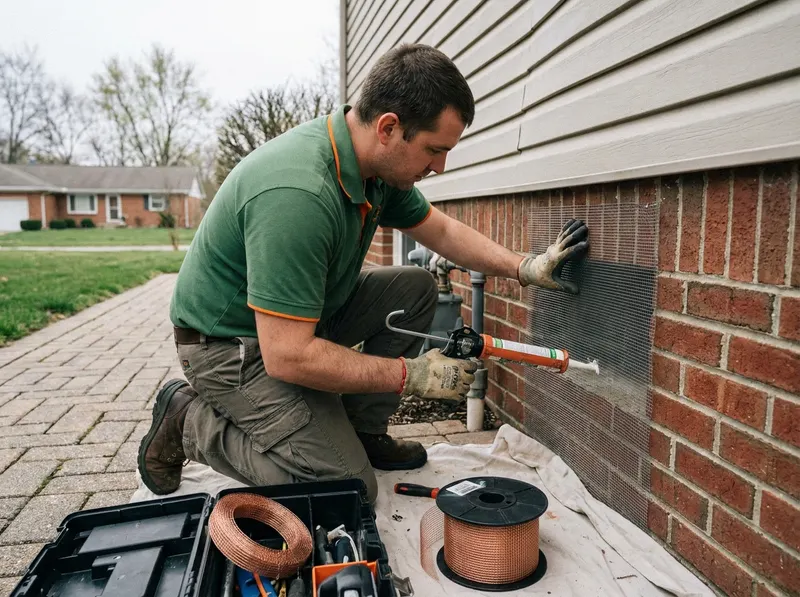
Rodent exclusion differs fundamentally from broadcast chemical baiting. When scratching sounds disrupt sleep inside plaster walls or droppings appear near food pantries, broadcast anticoagulant poisons risk rodent mortality within inaccessible wall voids, producing severe secondary odor and insect issues. Targeted rodent exclusion seals the structural envelope first using 19-gauge galvanized steel mesh, copper mesh, and elastomeric sealants that rodents cannot chew through. Extraction follows immediately inside the attic, crawlspace, or basement utilizing mechanical traps. This approach prevents chemical exposure risks for crawling infants and indoor pets while delivering definitive biological relief in single-treatment remediation roadmaps.
Older architectural styles across central Marion County present distinct structural entry vectors. In historical Victorian and Craftsman structures throughout Woodruff Place, Lockerbie Square, and Irvington, settle-cracks in fieldstone foundations, floor-joist gaps, and unmeshed crawlspace vents provide direct ground access for subterranean rodents. In mid-century brick ranches and bungalows in Broad Ripple, Butler-Tarkington, and Meridian-Kessler, settled limestone foundations and mature shade-tree canopies create elevated transit lines where rodents transition from branches onto roof valleys, uncapped chimney flues, and deteriorating soffits. Commercial transitions near Castleton and high-density alleyways in Fountain Square and Fletcher Place often push displacement rodents through utility conduit penetrations, garage door weather-stripping gaps, and plumbing chases.
Remediation follows a strict numbered sequence: 1. A physical attic-to-sill plate survey maps every breach wider than 0.25 inches (the width of a standard dime). 2. Technicians install physical exclusion barriers on exterior foundation vents, roof intersections, and pipe sweeps. 3. High-density mechanical trap stations deploy exclusively inside utility corridors, attics, and subfloors away from household foot traffic. 4. Monitored clearances occur over 7 to 10 days until trap activity reaches absolute zero. Homeowners can reach dispatch at (463) 304-9016 to verify baseline site entry.
Every job gets a firm, written price after a free on-site visit.
Tell us about your targeted rodent exclusion and extraction job in Indianapolis and we'll send a clear, written quote, usually the same day.
 Rovika Insect Services