Stinging insect remediation stabilizes homes facing sudden biological hazards in high-traffic domestic areas. Paper wasps frequently suspend open-comb umbrella nests beneath the deep eaves of Craftsman porches in…
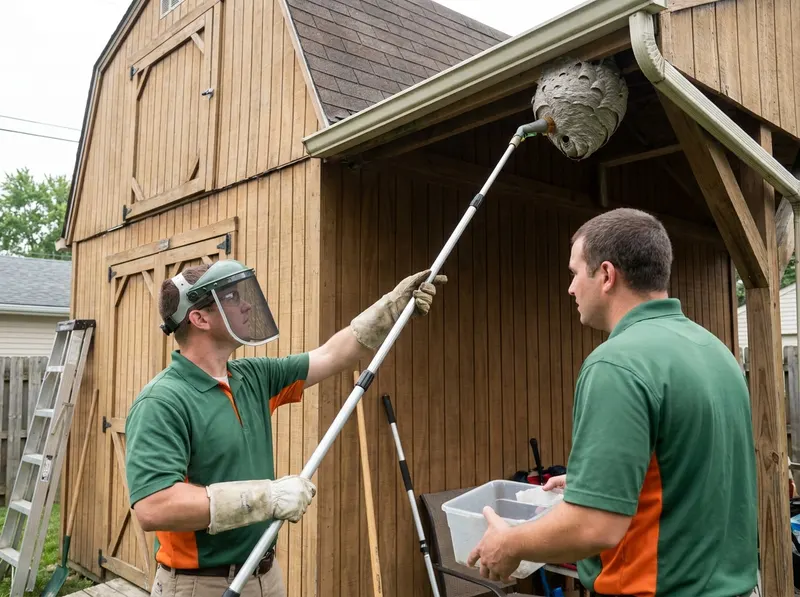
Stinging insect remediation stabilizes homes facing sudden biological hazards in high-traffic domestic areas. Paper wasps frequently suspend open-comb umbrella nests beneath the deep eaves of Craftsman porches in Irvington and Broad Ripple, while aggressive baldfaced hornets build enclosed, football-shaped carton nests in mature shade trees throughout Butler-Tarkington and Meridian-Kessler. Ground-nesting yellowjackets often populate undisturbed soil beds, lawn perimeters near the Monon Trail, and landscaping in Castleton. Left unaddressed, these colonies expand from several dozen workers in late spring to more than 4,000 aggressive defenders by late August, creating genuine medical hazards for children, pets, and hypersensitive adults sharing living quarters.
Selecting standalone nest extraction fits property owners managing an acute, localized exterior infestation who decline long-term auto-renewing subscriptions. When hornets establish aerial nests 20 feet high in historic roof brackets across Lockerbie Square or Woodruff Place, structural extraction requires high-reach applicator poles, direct aerosolized pyrethroid knockdowns, and mechanical detachment. If yellowjackets infiltrate weep holes, brick mortar joints, or foundational soffits near Fletcher Place, technicians avoid broadcast spraying. Instead, they inject precise micro-barrier dust formulations directly into the entry void to eliminate interior nesting cavities without driving stinging insects inward toward bedroom living spaces.
The mechanical remediation sequence follows five distinct stages: 1. Visual identification of the exact insect species and flight paths to map nest boundaries. 2. Application of targeted, low-volatility contact aerosols to neutralize airborne sentries and eliminate exterior worker activity. 3. Physical detachment and containment of visible carton or mud structures using industrial containment vessels. 4. Void injection of long-lasting residual dusts inside wall voids, roof overhangs, or subterranean tunnels to neutralize returning foragers. 5. Mechanical exclusion using localized copper mesh or silicone sealants on accessible entry points to prevent re-infestation of the same structural void.
Every job gets a firm, written price after a free on-site visit.
Tell us about your stinging insect and nest removal job in Indianapolis and we'll send a clear, written quote, usually the same day.
 Rovika Insect Services